
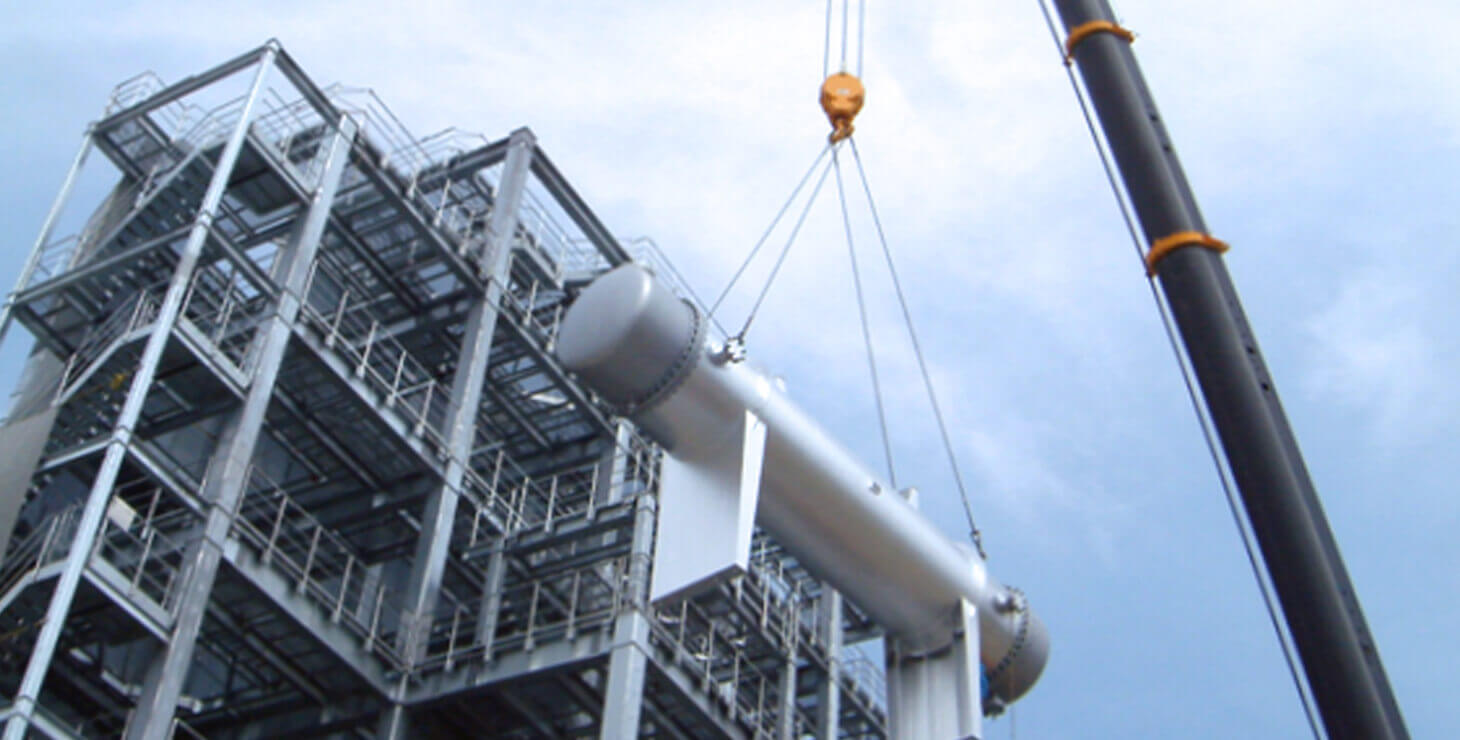
日本化学機械製造株式会社は、化学機器を自社工場にて製造できるプラントエンジニアリング企業です。
自社工場は、高圧ガス設備、圧力容器、また特殊材(耐食材料)の製作も可能で、材料手配から納入まで一括管理を行っています。プラントは様々な装置、機器類の組み合わせで構成されており、エンジニアリングには多くの知識と経験が必要とされます。
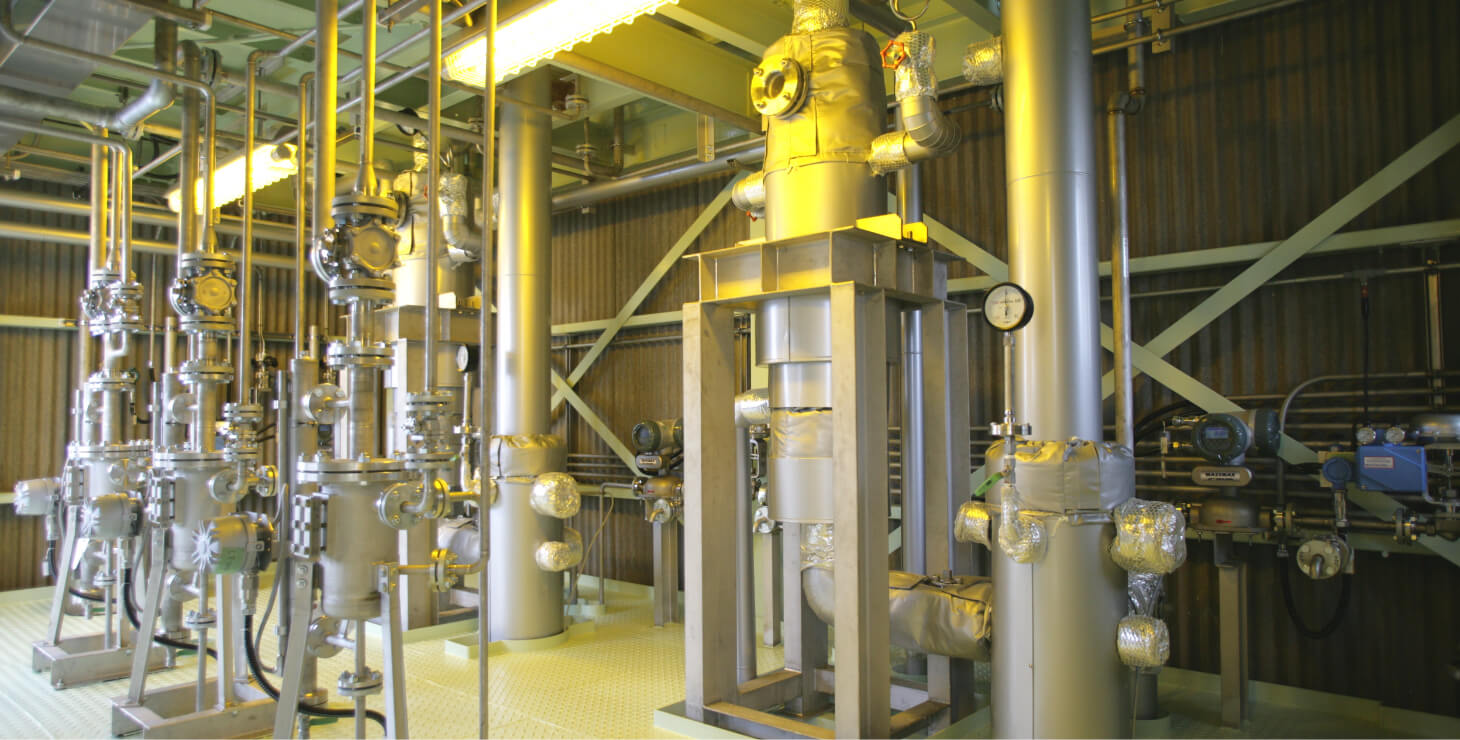
また、時代背景?外部環境の変化に伴いプラントに対するお客様のニーズも多種多様に変化しています。 設備の抱える様々な問題の解決、省エネルギー、環境対策、生産効率、品質向上、新製品生産のプロセス構築?設備計画の具現化によりお客様の事業価値向上の一助となるべく、最新の技術の開発、活用に努めております。 常にお客様の立場になり、安全で効率的な設備の構築を念頭に取り組んでおります。
-
THREE:On the laws of heat and cold, and atmospheric changes under their influence, many interesting facts were ascertained by the aid of the thermometers of Fahrenheit and R¨¦aumur. Dr. Martin, of St. Andrews, distinguished himself in these inquiries, and published his discoveries and deductions in 1739 and 1740. In 1750 Dr. Cullen drew attention to some curious facts connected with the production of cold by evaporation. Dr. Joseph Black discovered what he called latent heat, and continued his researches on this subject beyond the present period.
経験と実績をもとに、お客様のニーズに応じた最適な仕様?システムを構築、ご提案いたします。
-
THREE:
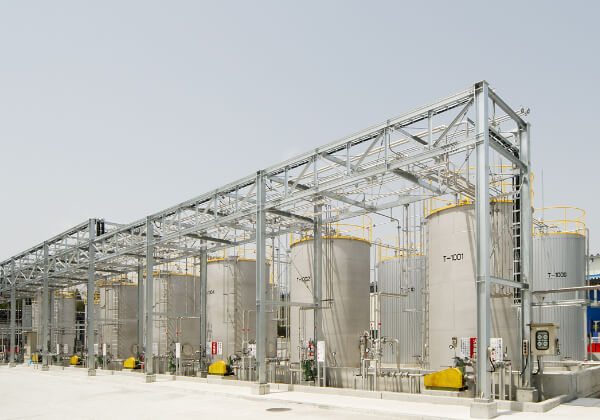
工場建屋、事務所棟、倉庫、試験棟などの建設も一括してご依頼いただけます。
-
THREE:[See larger version]DEPUTATION OF CONSTITUTIONALISTS BEFORE THE QUEEN OF PORTUGAL. (See p. 413.)
環境に配慮し、コストメリットを勘案した、省エネルギーで、省スペースな設備をご提案いたします。
-
THREE:With the military he had a far more violent contest. After the battle of Plassey, Meer Jaffier had conferred on the officers of the army what was called double batta, meaning an additional allowance of pay. Clive had always told the officers that it was not likely that the Company would continue this; and, now that the territories of Jaffier were become virtually their own, he announced that this must be discontinued. The Governor and Council issued the orders for this abolition of the double batta; he received in reply nothing but remonstrances. The officers, according to Burke's phrase, in his speech of December 1st, 1783, "could not behold, without a virtuous emulation, the moderate gains of the civil service." Clive was peremptory, and found his orders openly set at defiance by nearly two hundred officers, headed by no less a person than his second in command, Sir Robert Fletcher. These gentlemen had privately entered into a bond of five hundred pounds to resign on the enforcement of the order, and not to resume their commissions unless the double batta was restored. To support such as might be cashiered, a subscription was entered into, to which the angry civilians of Calcutta are said to have added sixteen thousand pounds. The conspirators flattered themselves that, in a country like India, held wholly by the sword, Clive could not dispense with their services for a single day. They were mistaken. On receiving the news of this military strike, Clive immediately set off for the camp at Monghyr. He was informed that two of the officers vowed that if he came to enforce the order, they would shoot or stab him. Undaunted by any such threats, although in failing health, and amid drenching rains, he pursued his journey, and, on arriving, summoned the officers of the army, and, treating the threats of assassination as those of murderers, and not of Englishmen, he reasoned with them on the unpatriotic nature of their conduct. His words produced the desired effect on many; the privates showed no disposition to support their officers in their demand, and the sepoys all shouted with enthusiasm for Sabut Jung, their ideal of a hero. The younger officers, who had been menaced with death if they did not support the conspiracy, now begged to recall their resignation, and Clive allowed it. He ordered Sir Robert Fletcher and all who stood out into arrest, and sent them down the Ganges to take their trial at Calcutta. Many are said to have departed with tears in their eyes. By this spirited conduct Clive crushed this formidable resistance, and averted the shame which he avowed not all the waters of the Ganges could wash out¡ªthat of a successful mutiny.
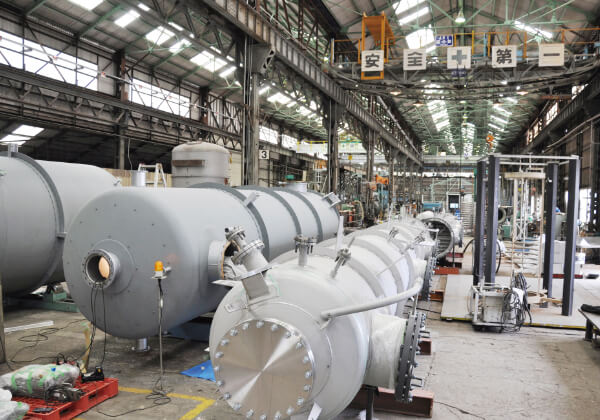
高圧ガス設備、圧力容器の製造資格を持った自社工場での製作により、品質、納期を管理しております。
-
THREE:The third topic discussed at these conferences was the nature of the relations then subsisting between France and Spain, and the projects of the former power in reference to the latter. These were explained by the Minister without any reserve, and with no symptoms of apprehension that they would be disagreeable to Britain, or of anxiety as to the result, whether they were so or not. He frankly avowed that, under cover of the sanitary cordon, 100,000 French troops were assembled; that it was proposed to throw them in two columns into Spain; that one column, of 40,000 men, was to pass into Catalonia, while the other, of 60,000, was to march by the great road through Irun upon Madrid. He stated that the sole object of this invasion was to insure the personal safety of the king, to afford him the opportunity to collect a native force strong enough to enable him to protect himself against the schemes of the Revolutionists¡ªthat is, to put down the Constitution. Of course, France said she entertained no views of conquest or aggrandisement, or even of prolonged occupation. She would withdraw her troops whenever the King of Spain said he could do without them, and yield up every inch of territory. In reference to this matter the Duke of Wellington wrote home for instructions, and in reply Canning said:¡ª"If there be a determined project to interfere by force or by menace in the present struggle in Spain, so convinced are his Majesty's Government of the uselessness and danger of any such interference¡ªso objectionable does it appear to them in principle, as well as utterly impracticable in execution¡ªthat when the necessity arises¡ªor, I would rather say, when the opportunity offers¡ªI am to instruct your grace at once frankly and peremptorily to declare that to any such interference, come what may, his Majesty will not be a party." To say that England peremptorily declined "to be a party" to the invasion of an independent state, in order to force upon the people a government contrary to their will, was not saying very much, nor putting the objection very strongly. We are assured, however, that the Duke steadily set his face against the project, pointing out that the step would be not only unjust, but impolitic; that it would precipitate the catastrophe which the French Government feared; that the Revolutionists would probably remove Ferdinand from Madrid as soon as they heard of the passing of the frontier by the French troops, and that, even if these troops should reach the capital, the Spaniards would not therefore submit, nor would the king be set at liberty. He argued that a war between France and Spain for such a purpose would be pronounced a war to put down free institutions, and that if France sought the support of her allies, the only one amongst them that had free institutions would feel it her duty to meet such a request with a refusal. Europe would be ranged into two hostile camps, that of absolutism on the one side and of revolution on the other; amid which not thrones only, but settled governments in every form, might be overthrown. In reply to these arguments, both the king and his Minister stated that whatever France might do in the matter she would do single-handed, and that she would not only not apply for assistance from without, but that, if such assistance were offered, she would refuse it. The Duke could not, however, prevail upon the French Government to refrain from bringing the question between France[234] and Spain before the Congress. The king and his Minister both contended that vast moral good would accrue from a joint remonstrance on the part of the Allies against the treatment to which the King of Spain was subjected, and a joint threat that if any violence were offered to his person or family all would unite to avenge the outrage.
コストを積算し、見積価格をご提示します。回収期間法などの設備投資の経済性計算をお客様とご一緒にシミュレーションすることも可能です。
-
THREE:The division on the second reading took place on the 6th of July, when the numbers were¡ªfor the Bill, 367; against it, 231; majority, 136. This result was a sufficient vindication of the appeal made to the country. The nation had now spoken constitutionally as to the evils of the old system of representation and unmistakably expressed its determination to have it reformed. The measure might be delayed in the Commons by vexatious opposition; but if it were to be defeated it must be by the House of Lords, and it required some boldness in the majority of that assembly to take upon itself to hinder the other branch of the legislature from effecting its own reform. The Bill now went into committee, when the case of each borough which it was proposed to disfranchise came under separate consideration. In Schedule A were placed, alphabetically, all the boroughs which had less than 2,000 of population, and these were to be disfranchised. When Appleby, the first on the list, came under consideration, there was a keen contest as to the actual numbers then in the town, and the question turned upon the census by which the committee were to be guided. By the census of 1821 the place would be disfranchised, but the inhabitants affirmed that by the census of 1831, then in progress, they were shown to have more than the requisite number; and Sir Robert Peel contended strenuously that they should wait for the more correct information. Mr. Wynn having moved a general resolution that the consideration of the schedules should be postponed till the result of the census was published, Sir Robert Peel said, with great show of reason, "After having obtained so large a majority as 136 on the principle of the Bill, Government would have acted wisely, even for the interests of the measure itself, to have postponed going into details till they were in possession of better documents on which to proceed. They know what is coming; they are aware of the event which is casting its shadow before¡ªnamely, that the boroughs will be overtaken[338] by the population returns of 1831. In another fortnight these returns would be laid before the House; and though his Majesty's Ministers now proceed expressly on the doctrine of a population of 2,000 and 4,000, they are guilty of the inconceivable absurdity of proceeding on the returns of 1821, when they can so soon be in possession of the census of 1831." The House, however, determined, by a majority of 118, to proceed upon the old census. A series of tiresome debates upon the details of each particular borough proceeded from day to day, and lasted for two months, the Ministry invariably carrying their points by triumphant majorities. The tone of the discussion was acrimonious, as might naturally be expected from the weighty personal interests involved. Sir Edward Sugden solemnly declared that he considered the tone and manner, as well as the argument, of the Attorney-General as indicating that they were to be dragooned into the measure. In the opinion of Sir Charles Wetherell all this was "too capricious, too trifling, too tyrannical, and too insulting to the British public, to carry with it the acquiescence either of the majority within or the majority without the House." The ill-temper and factious obstruction of the Opposition greatly damaged the Tory party out of doors and exasperated the people against them.
化学工場への納入実績が多く、各種法規にも精通しています。官庁申請書類の作成もサポートいたします。
-
THREE:
社内に様々なテスト装置をそろえておりますので、事前の検証も可能です。
新製品の生産プロセスの構築もご相談ください。
プラントの計画時から、設計、調達、建設、試運転、更には完成後のメンテナンスに至るまでトータルに対応いたします。当社は機器製作工場を所有しておりますので、細やかな機器設計?製作が可能です。
-
 FORE:Sir Francis Burdett once wrote a letter of a single sentence to his friend Lord Cloncurry, as follows:¡ª"Dear Lord Cloncurry, I should like to know what you think would allay Irish agitation? Yours truly, F. B." It would have taken a volume to answer this question, and perhaps, after all, Sir Francis Burdett would not have been satisfied. George IV. thought that his visit would have had that effect, and appearances for a time seemed to justify his sanguine anticipations. The visit had been long meditated. He set out on a yachting excursion soon after the coronation, and arrived at Plymouth on the 1st of August amidst the huzzas of an immense concourse of people. On the following day the royal squadron departed for Ireland, and anchored in the bay at Holyhead on the 7th. The news of his approach threw the people of Dublin into a paroxysm of joy, to which the newspapers of the day gave expression in the most extravagant terms. The blessing that awaited them seemed too great to be realised. Never had they comforted their hours of despondency or flattered themselves in seasons of imagined felicity, with anything approaching to the reality which fortune was about to shower upon them. The king's name, they declared, was more to them than a tower of strength; it had effected what neither patriots, philosophers, nor moralists could ever accomplish.On the 17th of March, a few nights after Mr. Cobden's motion, Mr. Miles brought forward a motion for relief to the agricultural interest in the reduction or remission of taxation. He complained that there had been an importation of wheat during the last thirty-two months seven or eight times greater in amount than in the thirty-six months immediately subsequent to the introduction of the Corn Law of 1828. The abundance of meat in Leadenhall, Smithfield, and Newgate Markets, through the importation of foreign cattle, was also made a subject of reproach against the Ministry, and he told the House, as the spokesman of the agricultural party, "that they had no confidence in the measures which the Government proposed." They thought that anything would be better than their present position. They saw that the tariff which was passed three years ago was now going to be revised again, and that the shield of protection which was thrown over some of the productions of their industry was about to be removed still farther from them. In such circumstances they could not refrain from asking themselves what there was to prevent the Corn Laws from going next? Mr. Disraeli then, in a strain of sarcasm which is stated to have elicited cheers and laughter from the House, assailed the consistency of the Premier, and the tone in which he rebuked the mutinous and rebellious members of his party. He believed, he said, Protection to be in the same condition now as Protestantism had been in 1828, and he, who honoured genius, would rather see the abolition of all Protection proposed by Mr. Cobden than by any right honourable gentleman or by any noble lord on either side of the House. It might be necessary, before such an abolition was accomplished, for the Premier to dissolve the Parliament for the benefit of the party which he had betrayed, and to appeal to the country, which universally mistrusted him. His solemn and deliberate conviction was that a Conservative Government was an organised hypocrisy.
工場建設、プラント新設の計画の立案には、大きな労力を要します。当社では、お客様の一助となるべく、官庁届け出の助成を行いながら、工場建設を進め、抱えておられる問題の解決に取り組んでおります。
-
 FORE:But our military achievements in the East Indies were on a scale to throw even these successes far into the shade. Lord Wellesley, the Governor-General, was entreated by the Peishwa of Poonah to assist him against the other Mahratta chiefs, Scindiah and Holkar. The Peishwa had been driven out of his territory by these chiefs, aided principally by the military talents of M. Perron, a Frenchman, who had for many years entered, with several other French officers, on the fall of the Mysore power, into the service of Scindiah. He had been extremely successful, and had been rewarded with a wide territory on the Jumna; and when, in 1793, Shah Allum, the Mogul, had been made prisoner, he had been consigned to the custody of M. Perron. The Frenchman had now given his aid to expel the Peishwa, and Lord Wellesley, in sending General Lake to restore the Peishwa, authorised him to attempt to win over M. Perron to the British interest by very brilliant offers of property and distinction, for Perron was deemed avaricious. The temptation, however, failed, both with Perron and his French officers. He took the field in support of Scindiah, with seventeen thousand infantry, from fifteen to twenty thousand Mahratta horse, and a numerous train of artillery.Still, emissaries continued to pass to and fro, and notwithstanding that the promised armament had failed to reach Ireland, the impatient Irish were determined to rise. In February, 1798, they sent appeals to the French to come over, assuring them that they had three hundred thousand men banded to receive them, who only wanted arms; and Talleyrand sent them word that a fresh armament was preparing. But on the 28th of that month, O'Connor, one O'Coigley, an Irish priest, and Burns, a leading member of the London Corresponding Society, were arrested at Margate as they were about to embark for France. Papers found on O'Coigley, or Quigley, proved his treason. One was a direct invitation to the French to send an army into England, as certain to prevent the sending of British forces into Ireland, and thus to make the descent there sure. He was condemned and executed, but Burns was acquitted, and O'Connor remanded for fresh evidence. That was soon forthcoming; for one Thomas Reynolds, who had been the treasurer for the insurgents in his county, and also a colonel in the intended revolutionary army, being pressed for money, betrayed his associates. In consequence of the information which he gave, a number of the conspirators were arrested at their place of meeting. The four chief leaders, however, were not there, as expected, namely, Lord Edward Fitzgerald, Emmet, Sampson, and MacNevin, but they were afterwards secured. Lord Edward Fitzgerald was surprised at one Murphy's, 153, Thomas Street, Dublin, and made a desperate resistance. He attacked Major Swan, who presented the warrant, with a dagger, and, being a powerful man, was very formidable. Major Swan discharged a pistol at him, but missed. Captain Ryan, next entering, was stabbed mortally by Lord Edward, and a bloody struggle ensued, Captain Ryan, who was, practically speaking, unarmed, behaving with great courage and self-sacrificing heroism. Major Sirr, who had surrounded the house with soldiers, then rushed in and fired at Fitzgerald, and wounded him in the shoulder. He was then overpowered and secured by the soldiers, and conveyed first of all to Dublin Castle and then to Newgate. This took place on the 19th of May. Captain Ryan died of his wounds on the 30th. Lord Edward died of fever, the consequence of his wounds, and of mortification at the failure of the enterprise (June 4).
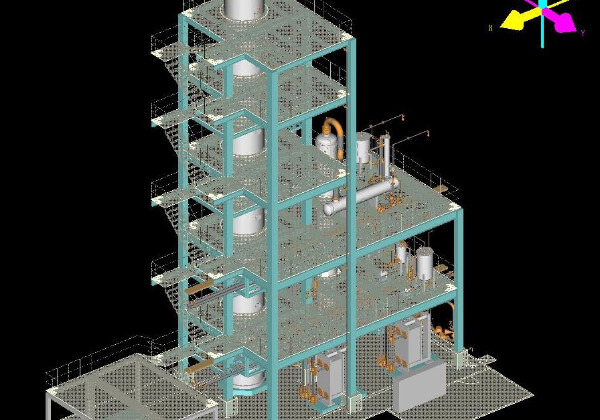
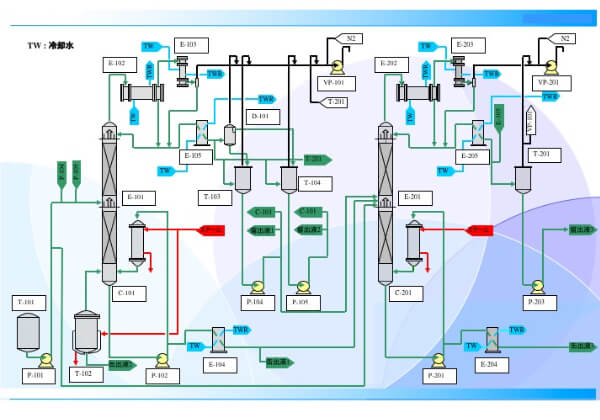
主要機器等の仕様を決定し、プラントの基本フローや配置を決定します。
-
 FORE:The next month Pitt despatched a smaller fleet and force to destroy the port of Cherbourg, which the French had constructed under Cardinal Fleury, and, as they stated by an inscription, "for all eternity." This time the command was given to General Bligh. Howe was admiral, and on board with him went Prince Edward, afterwards Duke of York. On the 8th of August the troops were landed at Cherbourg, which was[131] deserted by the garrison, and they destroyed the forts and harbour, demolished a hundred and seventy pieces of iron cannon, and carried off twenty-two fine brass ones. After re-embarking and returning to Portsmouth, Bligh was ordered to pay another visit to St. Malo, but still found it too strong for him; yet he landed his men in the bay of St. Lunaire, about two leagues westward of St. Malo; and the weather immediately driving Howe to sea, the army was marched overland to St. Cast, some leagues off. The soldiers were allowed to rove about and plunder, till Bligh heard that the Duke of Aiguillon was advancing against them at the head of a strong force. Bligh then, but in no hurry, marched for the port of St. Cast, followed by Aiguillon, who waited till he had embarked all but one thousand five hundred men, when he fell upon them, and slaughtered a thousand of them in a hollow way amongst the rocks leading down to the shore.The English having deposed Suraja Dowlah, the nabob of Bengal, and set up their tool, the traitor Meer Jaffier, who had actually sold his master, the nabob, to them, the unfortunate Nabob was soon assassinated by the son of Meer Jaffier. But Meer Jaffier, freed thus from the fear of the restoration of the Nabob, soon began to cabal against his patrons, the English. Clive was absent, and the government conducted by Mr. Henry Vansittart, a man of little ability in his course of policy. All discipline ceased to exist amongst the English; their only thought was of enriching themselves by any possible means. Meer Jaffier was not blind to this. He saw how hateful the English were making themselves in the country, and was becoming as traitorous to them as he had been to his own master. Early, therefore, in the autumn of 1760, Vansittart and Colonel Caillaud marched to Cossimbazar, a suburb of Moorshedabad, where Meer Jaffier lived, at the head of a few hundred troops, and offered certain terms to him. Meer Jaffier appeared to shuffle in his answer; and, without more ceremony, the English surrounded his palace at the dead of night, and compelled him to resign, but allowed him to retire to Fort William, under the protection of the British flag; and they then set up in his stead Meer Cossim, his son-in-law.
設備の構成要素の詳細な仕様や配置を決定し、図面を作成します。
-
 FORE:Yet, during this winter, while Massena's army was in a constant state of semi-starvation, badly clothed and badly lodged, and thus wasting away by sickness and desertion, that of Wellington increased in numbers, in physical condition, and in discipline. Whilst Massena's army, originally seventy-one thousand men, was ere long reduced by the battle of Busaco and the miserable quarters in the wet country near Torres Vedras to fifty-five thousand, the forces of Wellington had been augmented, by reinforcements from England, and by the addition of Portuguese and Spanish troops, to fifty-eight thousand. When Massena retreated to Santarem, Wellington followed him to Cartaxo,[607] and there fixed his headquarters, and ordered General Hill to post his division opposite to Santarem, so as to check the enemy's foraging parties in that direction. At the same time, Colonel Trant, who had surprised the French rear as Massena's army was leaving Coimbra on his march after Wellington to Torres Vedras, and had secured the sick and wounded in the hospitals there to the amount of five thousand men, and who retained possession of Coimbra, now joined Sir Robert Wilson and Colonel Millar, who commanded the Portuguese militia, and their united force appeared in Massena's rear, cutting off his communication with the north and also with the Spanish frontier.
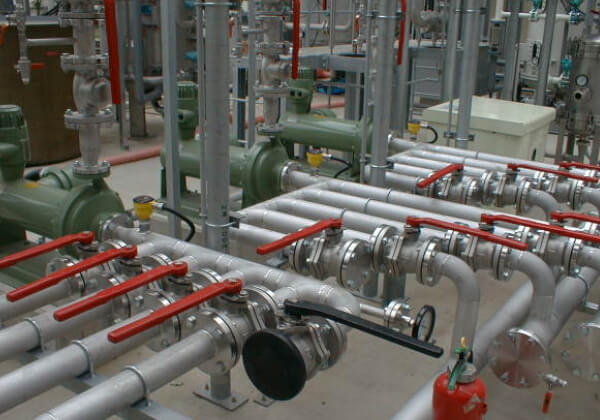
詳細設計に基づきポンプや部品類の購入品の調達先を選定し、発注します。
プラントを構成する主要な機器は特注製作が多く、材料発注、製作、各種検査、運搬まで工程、納期を管理します。 -
 FORE:The Ministry being complete, Parliament met on the 2nd of December. It was found that the new Administration had not that influence in the boroughs that Newcastle, who had cultivated it, had; and several members of the Cabinet, Pitt amongst them, had difficulty in getting returned, as was the case with Charles Townshend. In the king's speech, his Majesty was made to speak of the militia, which he was known by everybody to hold in sovereign contempt, as the best and most constitutional means of national defence. He announced also that he had ordered the return of the Hanoverian troops to their own country; and the Duke of Devonshire inserted in the Address from the Lords an expression of thanks for having brought these troops over. Pitt had declared that he would quit the Cabinet if such a vote was passed, and Temple came hurrying down to the House¡ªPitt being absent from the Commons with the gout¡ªand declared that he had quitted a sick bed to protest against it. This was an unlucky beginning. It was clear that there was want of unity in the Cabinet at its very birth, and out-of-doors the people were loudly complaining of the scarcity of food, and bread riots were frequent. The king himself could not help ridiculing the speech his new Ministers had composed for him; and a poor printer being arrested for putting another speech into his mouth, George said he hoped the man might receive very lenient punishment, for, as far as he could understand either of the speeches, he thought the printer's the best. To abate the ferment out-of-doors, the Commons passed two Bills: one prohibiting the export of grain, flour, or biscuit; the other prohibiting, for several months, distillation from wheat or barley.John Wilson, though born so far back as 1785, was one of the writers of this period distinguished for originality, freshness, power, and rich fancy, combined with learning and eloquence. As "Christopher North" he was long the delight of the readers of Blackwood's Magazine. His criticisms on poetry were distinguished by a profusion of thought and imagery, which flowed forth so rapidly, and sometimes so little under the control of judgment, that there seemed no reason why the[439] stream of illustration should not flow on for ever. He was a poet as well as a critic; but it is a singular fact that his imagination, like that of Milton, was more active in prose than in verse. In the latter, his genius was like a spirited horse in harness; in the former, like the same horse unbridled, and bounding wildly over the prairies. His principal poetical work was "The Isle of Palms," published in 1812, which was followed by one more elaborate, "The City of the Plague." Among the most popular of his prose fictions are, "The Lights and Shadows of Scottish Life," "The Trials of Margaret Lyndsay," and "The Foresters." But it was in periodical literature that he shone most brightly. Soon after the establishment of Blackwood's Magazine, in 1817, he became its chief editor, and thenceforward he poured forth through this organ all the treasures of his intellect. In 1820 he succeeded Dr. Thomas Brown as Professor of Moral Philosophy in the University of Edinburgh, which he held till 1851, when he resigned, in consequence of ill-health, receiving about the same time a pension of ¡ê300 a year from the Crown. As a professor he was greatly beloved by his students, on account of his genial nature and the warm interest he took in their welfare; and he was always surrounded by troops of friends, who respected his character almost as much as they admired his genius. He died in 1854.
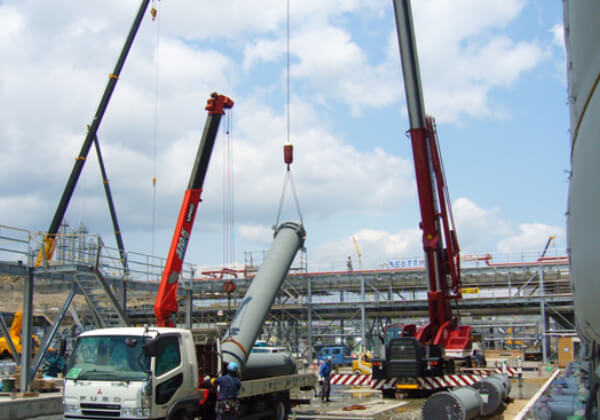
安全を第一に、管理技術者が責任を持って施工、工程、品質の管理を行いながら協力会社と連携し進めていきます。
土木?建築、機器据付、配管、電気?計装、断熱などの工事があります。 -
 FORE:The death of no English statesman had ever produced a deeper feeling of grief throughout the nation, or more general expressions of lamentation at the irreparable loss which the country had sustained. Mr. Hume had a motion on the paper for the day following his death; but instead of proceeding with it, he moved the adjournment of the House, which was agreed to unanimously. Mr. Gladstone paid an eloquent and touching tribute to his memory, concluding with the lines¡ª
プラント完成後、性能が出るか試運転を行って確認、調整を行います。
きめ細やかな運転指導により実運転へのスムースな移行を促します。完成図書と共にお引渡しとなります。
運転?保守フェーズ
-
 FORE:The difficulty which Buonaparte had created for himself by the usurpation of the thrones of Spain and Portugal, had the direct result which his wisest counsellors foresaw. Austria immediately began to watch the progress of the Peninsular struggle, and the resistance of the Spanish people; and the stepping of Great Britain into that field induced her to believe that the opportunity was come for throwing off the French yoke, and avenging her past injuries and humiliations. She had made arrangements by which she could call out an immense population, and convert them into soldiers. But in determining to declare open war against Buonaparte, Austria displayed a woful want of sagacity. To compete with a general like Buonaparte, and a power like France, it needed not only that her armies should be numerous but thoroughly disciplined. Nothing could have been lost by a little delay, but much might be gained. If Buonaparte succeeded in putting down the insurrection in Spain, he would then fall on Austria with all his victorious forces; if he did not succeed, but his difficulties increased, then every day that Austria waited was a day of strength to her. Russia, which was nominally at peace with Buonaparte, but which at heart was already determined on breaking the connection, saw, with just alarm, this precipitate movement of Austria. If she rose at once, Alexander was bound by treaty to co-operate in putting her down; if she deferred her enterprise for awhile, there was every probability that they could issue forth together against the common disturber. If Austria made a rash blow and were prostrated, Russia would then be left alone; and Alexander knew well, notwithstanding Napoleon's professions, that he would lose little time in demanding some concession from him.
プラント、機器の安全と安定稼働のために、定期的なメンテナンスをお薦めいたします。
-
 FORE:During the summer, meetings of a similar character were held at Cork, Longford, Drogheda, Kilkenny, Mallow, Dundalk, Baltinglass, Tara, and other places. At Tara, in the county Meath, on the 15th of August, an immense multitude was assembled¡ª250,000, at the lowest estimate, but represented by the Repeal journals as four times that number. The place was selected because of its association with the old nationality of the country, where its ancient kings were elected and crowned. O'Connell's speech on this occasion was defiant in tone, and in the highest degree inflammatory. Referring to a speech of the Duke of Wellington, he said, "The Duke of Wellington is now talking of attacking us, and I am glad of it. The Queen's army is the bravest army in the world, but I feel it to be a fact that Ireland, roused as she is at the present moment, would, if they made war upon us, furnish women enough to beat the whole of the Queen's forces." The Lord Chancellor Sugden having recently deprived of the commission of the peace all magistrates who were members of the Repeal Association, Mr. O'Connell announced that the dismissed magistrates would be appointed by the Repeal Association as arbitrators to settle all disputes among the people, who were not again to go to the petty sessions. He pronounced the union to be null, to be obeyed as an injustice supported by law, until they had the royal authority to set the matter right and substitute their own Parliament. In his speech after dinner to a more select audience, he said that the statesman was a driveller who did not recollect the might that slumbers in a peasant's arm, and who expected that 700,000 such men would endure oppression for ever. An outbreak would surely come, though not in his time, and then the Government and gentry would weep, in tears of blood, their want of consideration and kindness to the country whose people could reward them amply by the devotion of their hearts and the vigour of their arms. What were the gentry afraid of? It could not be of the people, for they were under the strictest discipline. No army was ever more submissive to its general than the[527] people of Ireland were to the wishes of a single individual.
生産量を減らすことなく、生産能力を増強するなど、お客様のご要望にお応えできるソリューションをご提案いたします。
お客様のプロセスノウハウと当社の固有技術の融合によって最適化、効率化、さらには環境に優しい設備を実現をいたします。海外現地法人(タイ、ベトナム)におきましても同等のエンジニアリングが提供できるように、本社の技術者と連携し管理いたしております。

※これ以外にも様々な単位操作装置、単体機器製作ができます。
| 業種?分野 | プラント?設備名称 | 構成プロセス | 付帯設備?工事施工 |
|---|---|---|---|
| ファインケミカル | IT関連化学品プラント | 反応プロセス ろ過分離プロセス 乾燥プロセス |
クリーンルーム、充填、タンクヤード、 ユーティリティ、消火?防火設備、 土木?建築、計器?計装工事、 電気工事 |
| 食品工業 | 澱粉工場 | 反応プロセス 分離プロセス 精製プロセス 脱水?乾燥プロセス |
タンクヤード、ユーティリティ、 消火?防火設備、土木?建築、 計器?計装工事、電気工事、 原料受入?貯蔵設備、計量?包装設備 |
| 化学工業 | 合成樹脂工場 > | 反応プロセス 蒸留プロセス 濾過分離プロセス 乾燥プロセス |
タンクヤード、ユーティリティ、 供給設備、充填、自動倉庫、 焼却設備、出荷設備 |
| 食品工業 | 糖化工場 > (異性化糖類製造設備) |
液化?糖化プロセス 濃縮プロセス 濾過?精製プロセス |
タンクヤード、ユーティリティ、 土木?建築、計器?計装工事、 電気工事 |
| 環境?リサイクル | 溶剤回収プラント | 濃縮?調整プロセス 蒸留プロセス |
タンクヤード、計量設備、 ユーティリティ、消火?防火設備、 計器?計装工事、電気工事、 原料受入?貯蔵?出荷設備 |
| 無機化学工業 | 触媒製造プラント (自動車用) |
調合プロセス コーティングプロセス 焼成プロセス |
ロボット搬送システム、 原料調整?供給装置 |
| 無機化学工業 | 二次電池用原料 精製プラント |
調整プロセス 反応プロセス 分離?濃縮プロセス 蒸留プロセス |
タンクヤード、ユーティリティ、 土木?建築、空調設備、集塵?局所排気、 計器?計装工事、 電気工事、貯蔵設備、計量?包装設備 |
| 新エネルギー | バイオエタノール 大型実証モデルプラント > |
蒸留プロセス 脱水プロセス |
計器?計装工事、電気工事 |
| 無機化学工業 | 水素回収設備 | 水素回収プロセス | タンクヤード、冷却システム、 計器?計装工事 |